Copyright 2024 © HappyTours
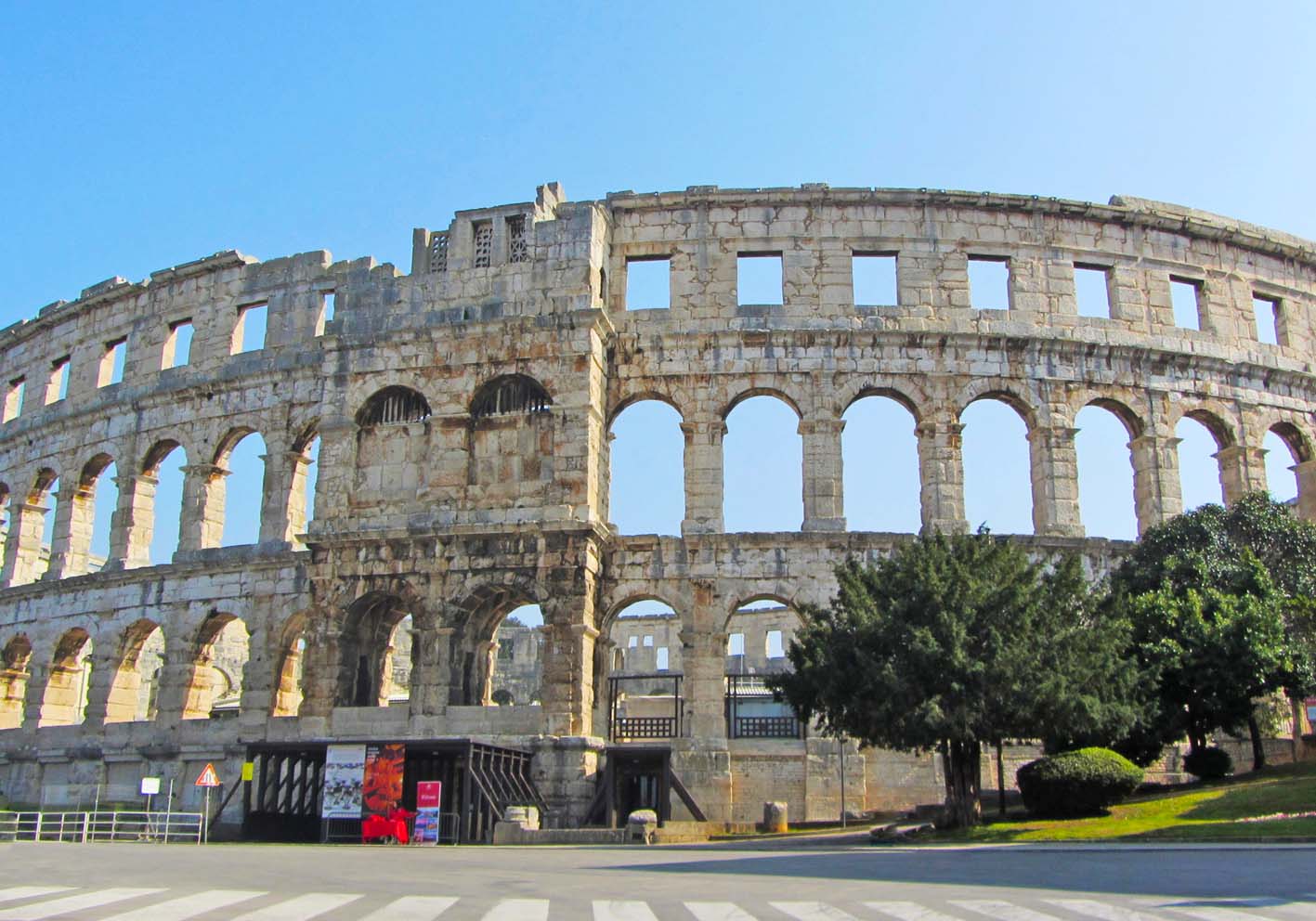
The most famous and important monument, the starting and ending point of every sightseeing tour is the Amphitheater, popularly called the Arena of Pula, which was once the site of gladiator fights. It was built in the 1st century AD during the reign of Emperor Vespasian, at the same time as the magnificent Colosseum in Rome.
Today, it is the venue for many different events – Pula Film Festival, various concerts, opera, ballet, sports competitions… since its capacity is about 5000 spectators.
Pula - the biggest city in Istria with long and rich history and many amazing sights to see dating since Roman time.
From Roman times to the present, Pula's rich history can be seen at every step. In a few hours of the tour, you can experience the spirit of times long gone immersed in a modern city that is pleasant to live in.
Triumphal Arch of the Sergi – Golden Gate
Temple of Augustus
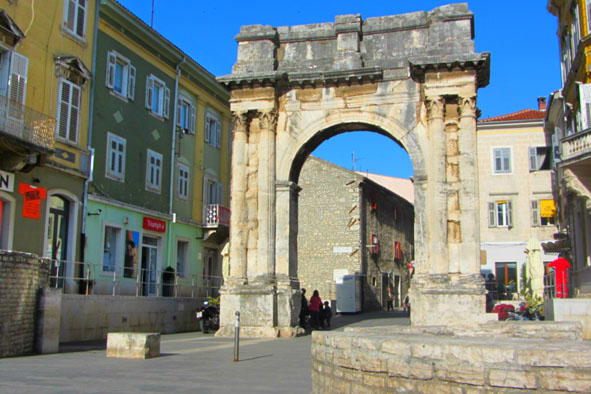
The ‘Golden Gate’ was erected between the years 29 and 27 BC by the Sergi family, in honor of three members of the family who held important positions in Pula at that time.
The gate and wall were pulled down in the beginning of the 19th century as a result of the city expansion outside the city walls.
Today numerous cultural performances, theatrical and musical, are held on the square next to the Arch. The adjacent street is a shopping area.
Amphitheater - Arena of Pula
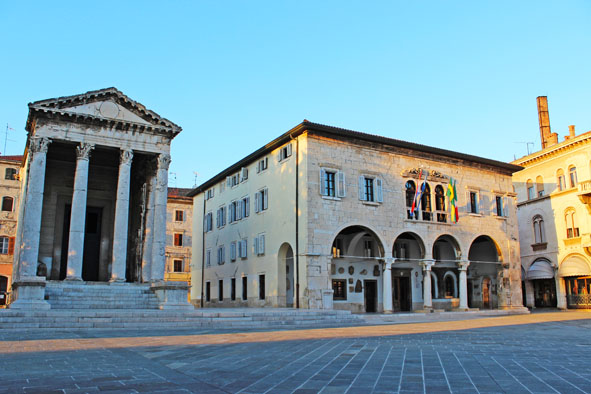
The Temple, situated in the Forum, is dedicated to goddess Roma and Emperor Augustus. It was constructed between the year 2 BC and AD 14 when the Emperor died. According to its shape it follows the typical pattern of temples. The function of the Temple changed through the years: with the ending of the pagan ancient era its original pagan function ceased and the temple was afterwards used as a church, granary, and in the beginning of the 19th century it was a museum for stone monuments. In 1944 it was hit by a bomb and completely destroyed. It was reconstructed between the years 1945 and 1947 and nowadays it houses a collection of ancient stone and bronze sculptures.
For more information about Pula, visit the Pula Tourist Board link: